PhD Research Advances AI Support for the Next Generation of PIF

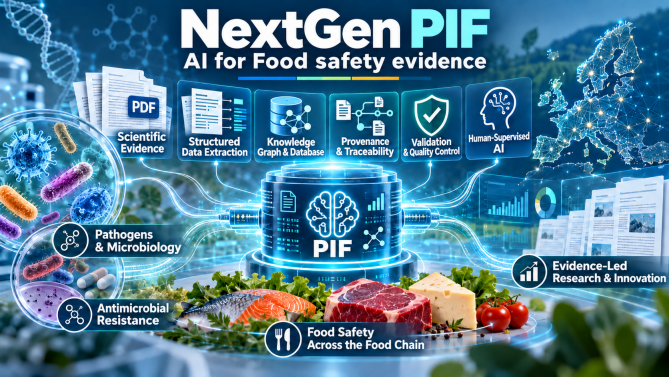
A new phase of the Pathogens-in-Foods (PIF) database is set to begin with the recently approved NextGen PIF project, “Intelligent Data Analytics and Antimicrobial Resistance Mapping in the Pathogens-in-Foods database.” The project closely aligns with the doctoral research of Lucas Ribeiro Silva, Research Fellow in the PIF database project and PhD candidate in Intelligent Systems Engineering at the Polytechnic University of Bragança (UPB). His PhD investigates how artificial intelligence can support the full evidence lifecycle in PIF, from title-and-abstract screening and scientific PDF processing to structured data extraction, validation, provenance tracking and human curation.

Continue reading

THE NEXTGEN PIF PROJECT

The NextGen PIF project “Intelligent Data Analytics and Antimicrobial Resistance Mapping in the Pathogens-in-Foods database” has been approved by EFSA, and the Grant Agreement would enter into force on 1 January 2027 with a 4-year duration. Central to this new agreement is the expansion of the database’s capabilities through the integration of a dedicated antimicrobial resistance (AMR) catalogue, featuring historical and current data dating back to the year 2000. The initiative will continue to populate the platform with recent microbiological data covering fourteen food categories and twenty-eight major pathogens, including selected parasites found in fishery products.

Continue reading

LAUNCH OF AI-PIF EXPLORER

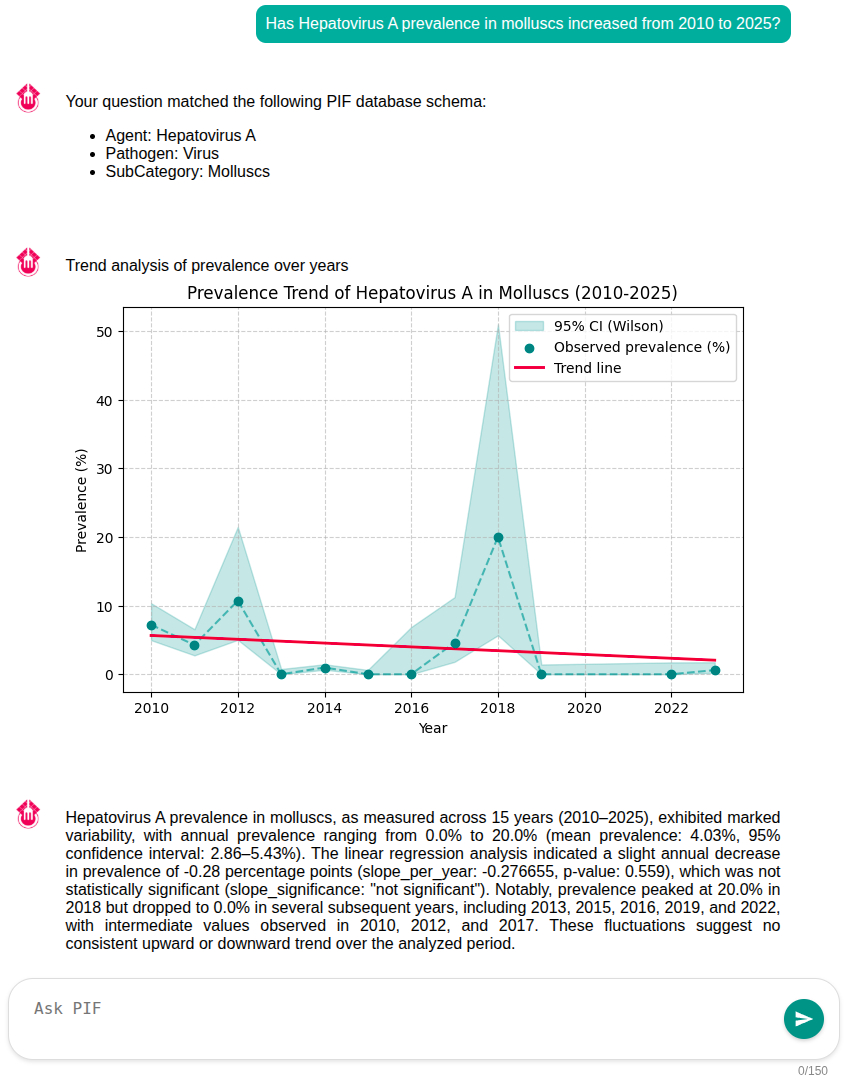
We are pleased to announce the launch of AI-PIF Explorer, an advanced AI-powered chatbot developed for exploring the Pathogens in Foods (PIF) database. The platform is designed to add robust interpretative value to the microbiological occurrence data stored in PIF while also supporting the generation of publication-ready reports. AI-PIF Explorer is accessible through the PIF database website and represents an important step in enhancing the usability of microbiological data for food safety research and evidence synthesis.

Continue reading

MSc DISSERTATION OF LUCAS SILVA

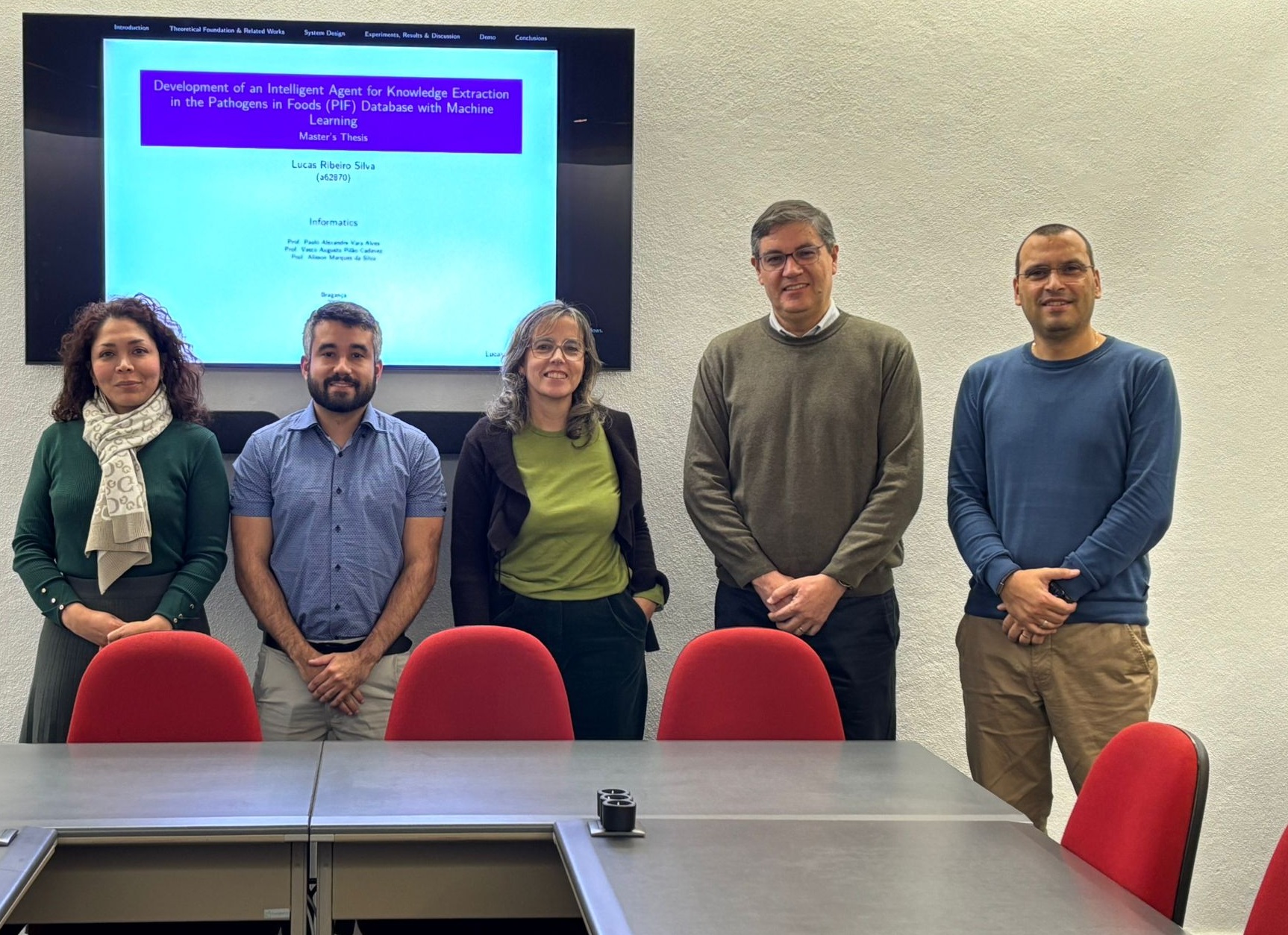
Lucas Silva who serves as PIF Informatician since November 2024 has concluded his MSc with the dissertation of the thesis: “Development of an Intelligent Agent for Knowledge Extraction in the Pathogens in Foods (PIF) Database with Machine Learning”, in which he designed and developed a visualization-oriented natural language interface (V-NLI) chatbot capable of enabling domain experts to query complex pathogen data, perform meta-analyses, and generate dynamic reports and visualizations through the integration of embedding models, SLMs, vector search, and advanced prompt engineering techniques.

Continue reading

The new “Vibrio” catalogue has been launched

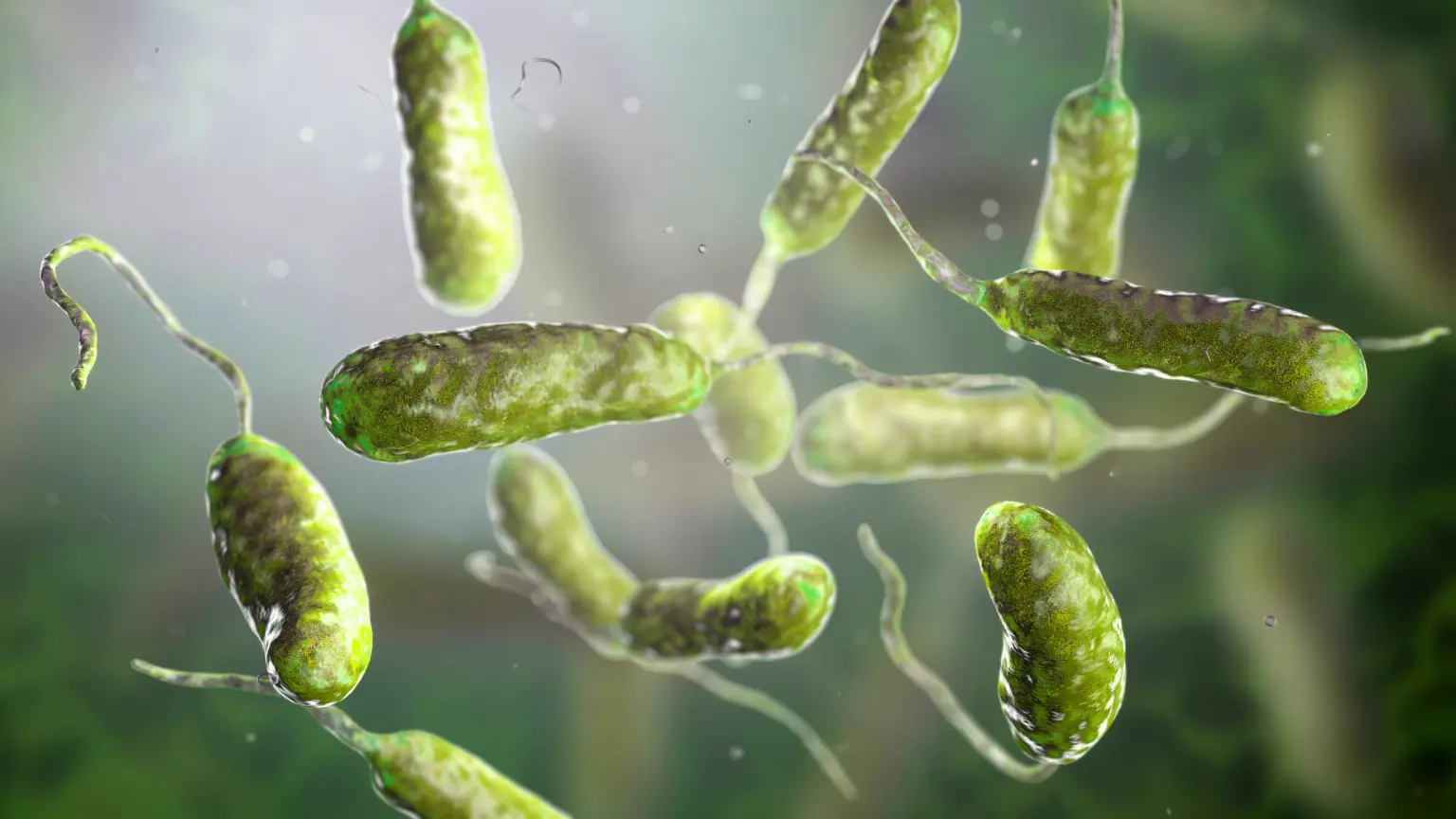
The PIF team is very happy to announce the launch of the new catalogue “Seafood borne” containing prevalence and enumeration data of Vibrio spp. of public health importance (i.e. Vibrio parahaemolyticus, Vibrio vulnificus, and Vibrio cholerae non-O1/non-O139) in seafood produced, commercialised and/or consumed in Europe. Vibrio species are important for their roles as human pathogens, causing diseases like cholera and seafood-associated gastroenteritis. Their past and ongoing pandemics worldwide highlight their significant impact on global health.

Continue reading

NEW MEMBERS IN THE PIF PROJECT TEAM

Grant Agreements funded by EFSA made it possible to recruit a junior reviewer – Mariem Ayed – and a Computer Engineer – Lucas Silva, to dedicate to the data feeding and the maintenance and improvement of the Pathogens-In-Foods database. Lucas Silva is carrying out his Masters in Informatics at IPB, conducting research towards automated data analytics and interpretation of PIF contained data.

Continue reading

THE NEW “NEMATODES” CATALOGUE HAS BEEN LAUNCHED

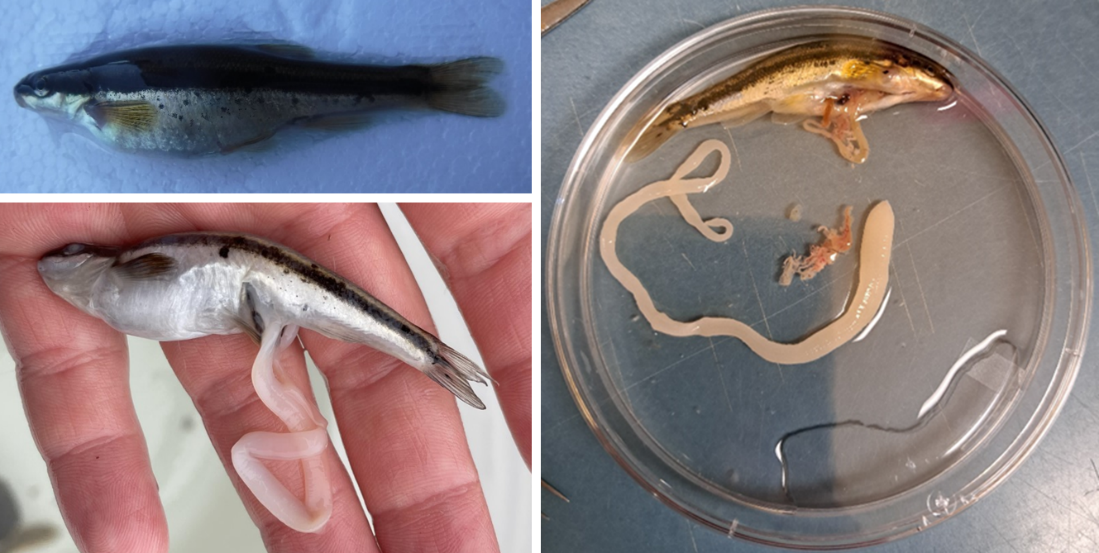
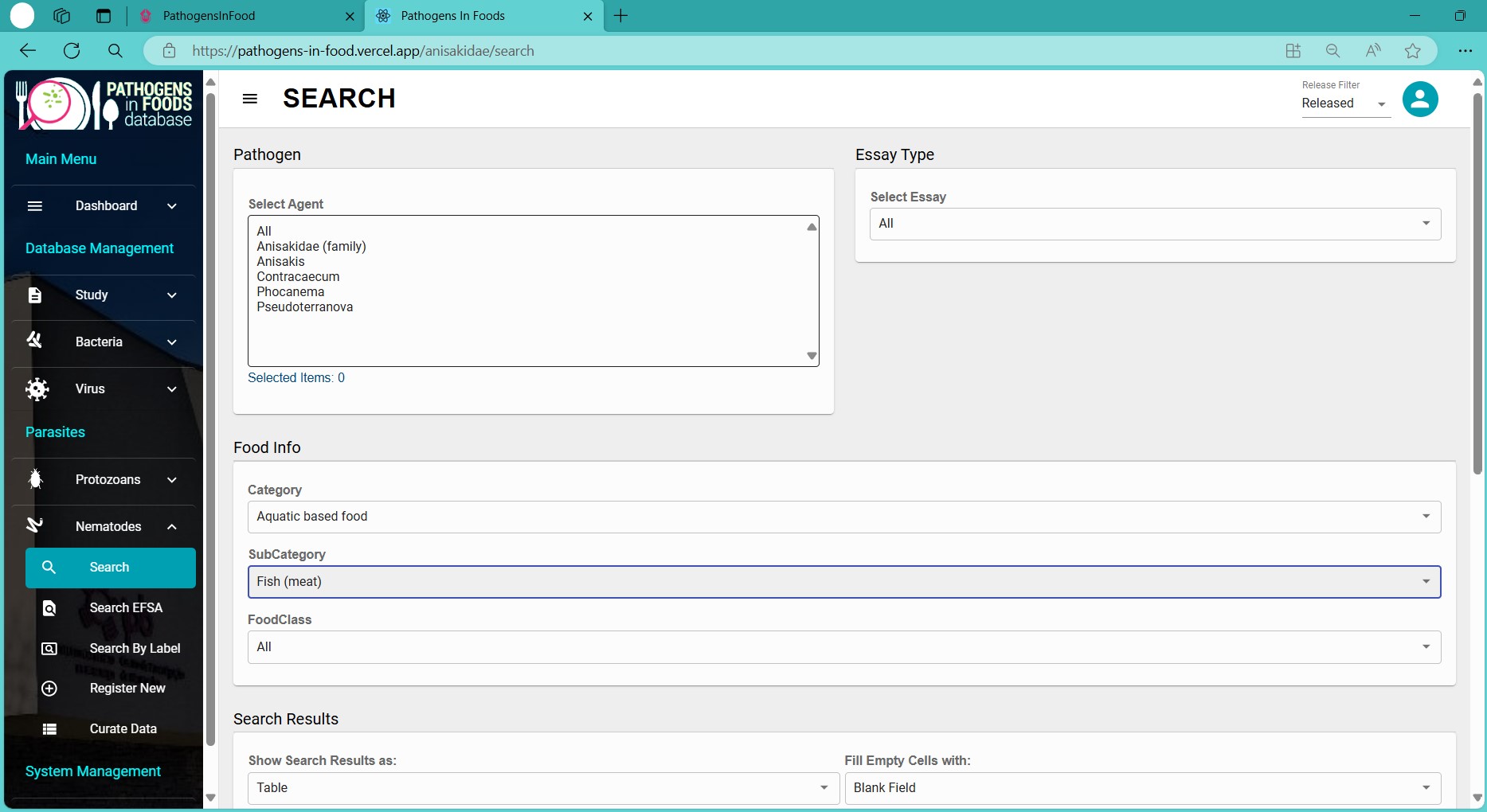
A new catalogue has been created in PIF! The NEMATODES catalogue was launched on 31st December 2024, containing occurrence data on Anisakis, Contracaecum, Phocanema, Pseudoterranova, and other parasitic genus such as Opisthorchis, Metorchis, Dibothriocephalus, Bolbosoma, Corynosoma, Kudoa, and Cryptocotyle, in fishery products whether wild or farmed. To date, the Nematodes catalogue comprises over 5000 data entries.

Continue reading

INSIGHTS FROM THE NEW PIF: PRESENTATION AT ICSREFE24

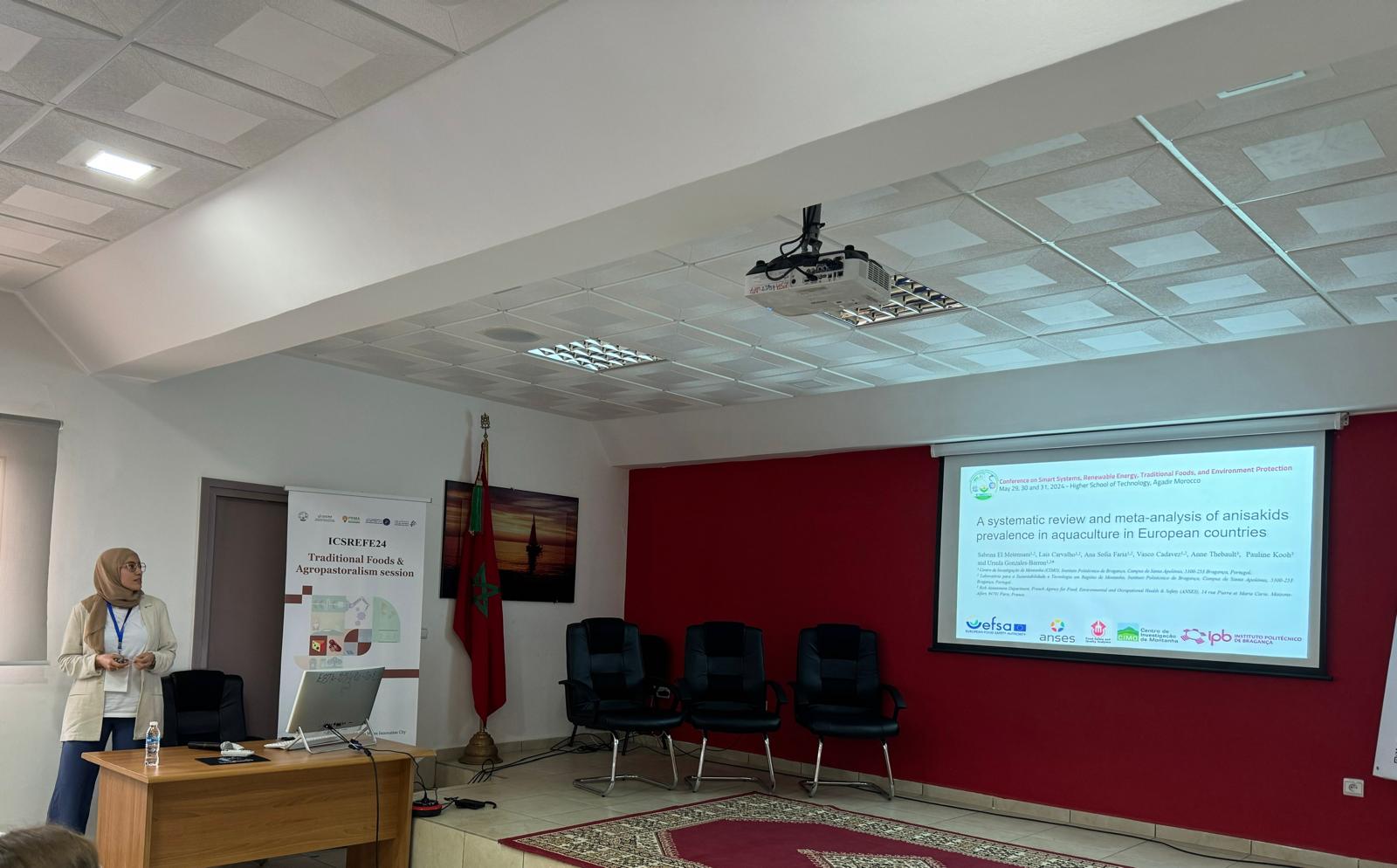
The study "Systematic Review and Meta-Analysis of the Prevalence of Anisakids in Aquaculture in European Countries" was presented as a scientific communication at the International Conference on Smart Systems, Renewable Energy, Traditional Foods, and Environmental Protection (ICSREFE24), held from May 29-31, 2024, at the Higher School of Technology of Agadir, Ibn Zohr University. The presentation highlighted how this comprehensive review effectively compiles data on the prevalence of Anisakids in aquaculture across various European countries.

Continue reading

PATHOGENS IN FOODS DATABASE PRESENTATION IN SCICOMPT 2024

Pathogens in Foods (PIF) was presented as a scientific communication tool at Scicom Pt 2024, held on May 8-10 in Braga. The presentation demonstrated how PIF effectively gathers data on the prevalence and enumeration of different pathogens in food matrices and how this tool can be used by researchers in the food safety field.

Continue reading

UPDATES ON ANISAKIDS OCCURRENCE DATA AND NEMATODE CATALOGUE STRUCTURE

Since December 2023, data on the occurrence of Anisakid nematodes (from 2010- 2023), including Anisakis, Contracaecum, and Pseudoterranova, has been extracted from 265 publications focusing on wild fish produced and commercialized both within and outside Europe. Additionally, data from 11 publications concerning Aquaculture in European countries has been collected, with 9 publications providing data on both Aquaculture and wild sources. Furthermore, a dedicated catalogue for these nematodes has been added to the Pathogens in Foods database, intended to facilitate easy accessibility and retrieval of the available data.

Continue reading